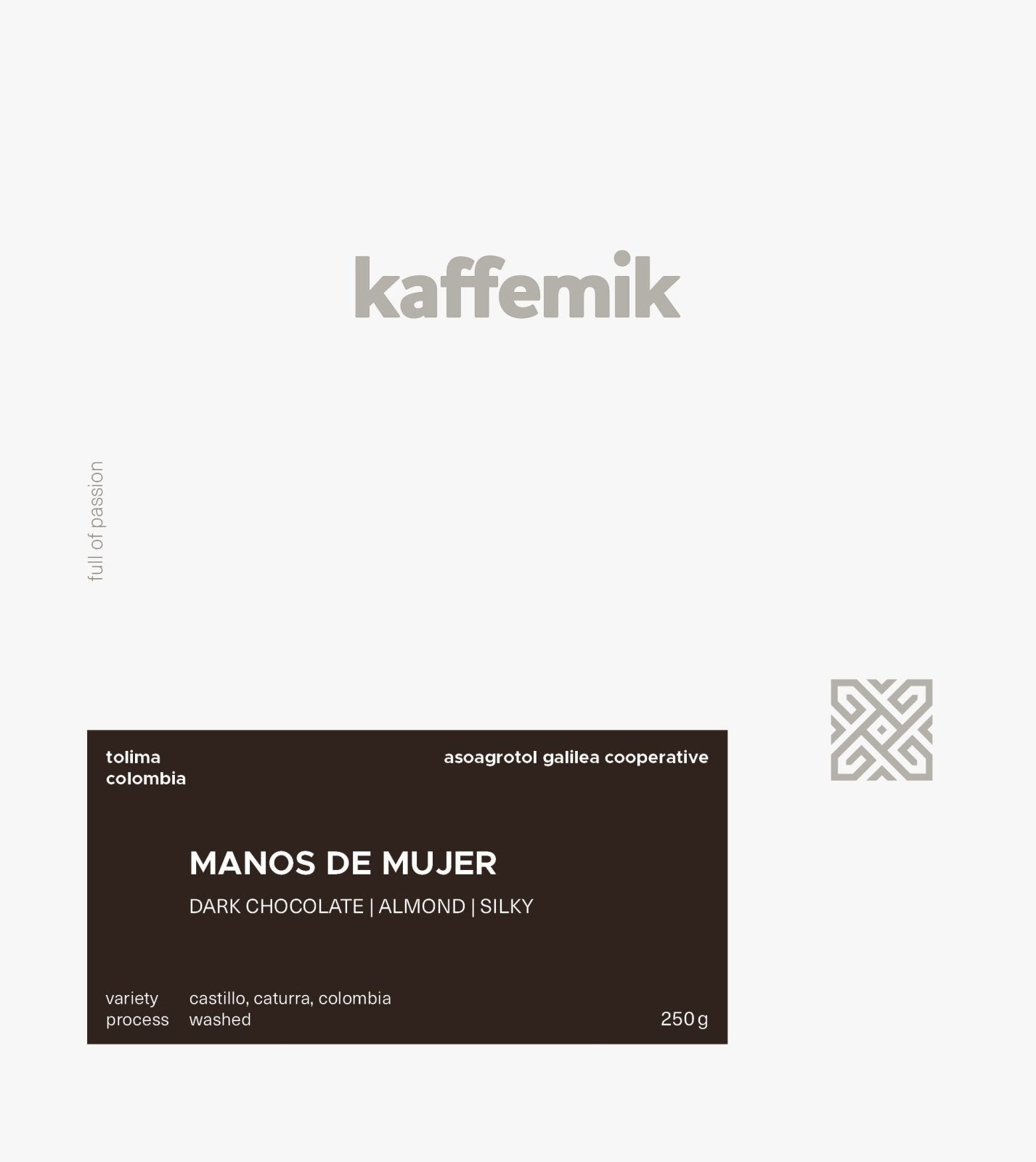

MANOS DE MUJER | Colombia | Washed
MANOS DE MUJER | Colombia | Washed
Couldn't load pickup availability
- Dark chocolate, almond
PRODUCTION
REGION Prado, Tolima
FARM/COOPERATIVE Asoagrotol Galilea Cooperative
PROCESS Washed
VARIETY Castillo, Caturra, Colombia
ALTITUDE 1,500 - 1,800 masl
IMPORT Sucafina
About the coffee
About the coffee
Asoagrotol Galilea was founded in 2016 by a group of neighbors who had been displaced from their land due to ongoing violent conflict. They come from Villarrica, Cunday, Purificación, Prado, and Dolores—all municipalities in the Tolima Department—and now cultivate new land in Prado, Tolima. They received their organic certification in 2019 and are also Fairtrade and RFA/UTZ certified.
The *Manos de Mujer* project focuses on the female producers within the cooperative and differentiates their coffees. It puts women at the center as coffee producers and gives them more visibility within the supply chain.
Members have access to agronomists who advise both individual farms and the cooperative as a whole. They provide support on topics such as Good Agricultural Practices (GAP), soil nutrition, and other agricultural issues.
In addition to coffee, the members cultivate a variety of other crops and keep livestock, including sugar cane, cocoa, bananas, potatoes, onions, and other products for the families' own consumption.
The coffee is selectively hand-picked and processed on the respective farms. Ripe, red cherries are pulped using hand-operated pulping machines and then fermented for 12 to 24 hours. After fermentation, the parchment is washed in clean water and laid out to dry. Drying takes place either on elvas (raised drying beds), on platforms on rooftops, or on patios.
Tolima lies nestled in the central Andes of Colombia. Although the climate is very well suited to coffee cultivation, Tolima was long considered a less desirable region due to armed conflict and drug trafficking. Many agricultural communities were caught in the crossfire.
More recently, the region has had the opportunity to open up and reduce violence, drug production, and trafficking. Despite its complex past, Tolima is now the third-largest coffee-growing region in Colombia.
Under such conditions, producer organizations play a vital role in transforming their communities. Associations and cooperatives create jobs and make coffee more attractive to young people. Many groups in the region organize courses and training in barista skills, quality control, and even business management.
In a region where employment opportunities outside of coffee farming are very limited, creating new job opportunities is crucial. This allows young people to find alternatives to the cycle of violence and crime. Furthermore, membership in a cooperative provides significantly better access to agronomic, commercial, and economic support.
Transparenz
Transparenz
We paid: €9.06/kg
Roasted Cost: €11.43/kg
Recipes
Recipes
Share